Local Moving
Local Moving Overview
📍 We serve all of San Diego County, popular areas listed below
North County Coastal
Carlsbad Encinitas Oceanside Del Mar Solana Beach
North County Inland
Escondido Poway Rancho Bernardo San Marcos Vista Ramona
Riverside County
Lake Elsinore Menifee Murrieta Temecula
Central San Diego
La Jolla Carmel Valley Mission Valley North Park Hillcrest Pacific Beach Ocean Beach Point Loma Downtown San Diego Kearny Mesa Scripps Ranch Clairemont Serra Mesa
East County
El Cajon Santee Lakeside La Mesa Lemon Grove Spring Valley Alpine
South Bay
Chula Vista National City Coronado Bonita Imperial Beach
Orange County
Irvine Aliso Viejo Dana Point Laguna Hills Laguna Niguel Lake Forest Mission Viejo Rancho Santa Margarita San Clemente San Juan Capistrano
Long Distance Moving
Long Distance Overview
🗺️ We move to all 50 states, popular routes listed below
Popular Routes
San Diego to Los Angeles San Diego to Las Vegas San Diego to Phoenix San Diego to Denver San Diego to Seattle San Diego to Portland San Diego to Austin San Diego to Dallas San Diego to Nashville San Diego to Boise San Diego to Raleigh
Senior Moving
Senior Moving Overview Office Space Planning Furniture Fit Planner
👴 We serve all of San Diego County, popular areas listed below
La Jolla Rancho Bernardo Carlsbad Encinitas Del Mar Oceanside Escondido Poway Chula Vista Carmel Valley Santee El Cajon Lakeside
More Services
Office Moving Medical Equipment Moving Packing Services Piano Moving Golf Cart Moving Custom Crating TV & Art Mounting Junk Removal Last Minute Moving Emergency Pack-Out Military Moving Storage Loading & Unloading
Areas We Serve
📍 We serve all of San Diego County, popular areas listed below
North County Coastal
Carlsbad Encinitas Oceanside Del Mar Solana Beach
North County Inland
Escondido Poway Rancho Bernardo San Marcos Vista
Central San Diego
La Jolla Mission Valley North Park Hillcrest Pacific Beach
East County
El Cajon Santee Lakeside La Mesa
South Bay
Chula Vista National City Coronado
Orange County
Irvine Mission Viejo Dana Point San Clemente
Crew Calculator Blog About Us Contact Us 📞 (858) 490-0155 Get Free Quote →
Lithium & Lead-Acid · Expert Guide

Golf Cart Batteries
In Transport & Storage

The battery is the biggest real variable in any cart move: it sets the weight, the prep, and the safety question. Here is the complete chemistry-by-chemistry guide our own crews work from.

Get My Cart Transport Quote →📞 (858) 490-0155
50–80%
Lithium Transport Charge
350–400
Lead-Acid Pack Lbs
TOW
Switch Before Loading
32°F
Lithium Charge Floor
🚗 Carts, LSVs & Utility Vehicles
💰 Flat-Rate Quotes
Licensed & Insured
💬 Since 1997 · 50,000+ Moves
4.6★ · 500+ Reviews

Key Takeaways

By the Discount Movers Team · Published & last reviewed July 31, 2026 · Licensed California carrier · CAL-T #201759 · US DOT #4372335

The Direct Answer

Lithium Or Lead-Acid:
The Battery Decides The Prep

Yes — a moving company can transport a lithium-battery golf cart, and Discount Movers does it every week. The battery stays installed in the cart, which is exactly what makes it routine: federal hazardous-materials rules treat a battery installed in a vehicle or equipment differently from loose, packaged lithium cells. What changes with chemistry is the preparation — charge target, switches, and what we need to know before the truck arrives. This guide is the complete prep, for both chemistries, as we actually require it.

Why a moving company is publishing this: batteries are the single biggest real logistics variable in cart transport. They set the cart’s weight (a 300-pound swing), its ramp behavior, its storage tolerance, and the one safety question that matters (is the pack healthy?). Competitors’ cart pages don’t mention chemistry at all — which tells you who has and hasn’t loaded many carts.
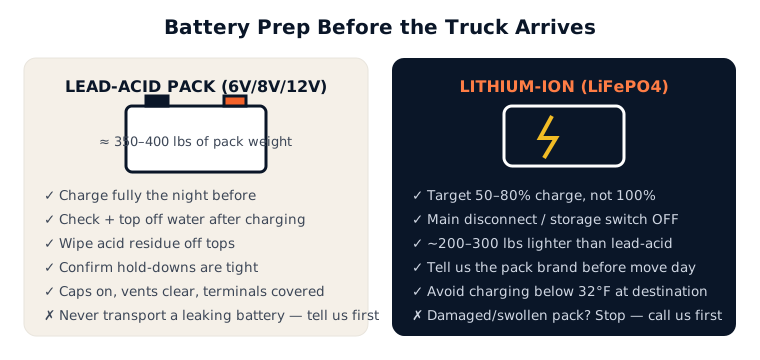
Golf cart battery preparation before transport: lead-acid and lithium-ion checklists side by side
The two prep lists, side by side. Details for each below.

Chemistry

What Actually Differs
Between The Two Packs

Lead-acid vs. lithium-ion golf cart batteries for transport and storage
FactorLead-acid (6V/8V/12V flooded)Lithium-ion (LiFePO4)
Pack weight~350–400 lbs~100–150 lbs
Transport charge targetFull charge, water topped after50–80% state of charge
Storage behaviorSelf-discharges 3–5%/month; sulfates if left lowMonths of shelf stability at partial charge
Storage maintenanceRecharge every 8–12 weeksCheck at ~6 months
Cold sensitivityCapacity drops when cold; recoversCharging below 32°F prohibited by most makers
Heat sensitivityWater loss accelerates; check levelsDegradation accelerates; BMS may derate
Switch prepTOW/RUN to TOWTOW/RUN to TOW + main disconnect OFF
Damage red flagsCracked case, acid residue, sulfur smellSwelling, heat, BMS fault codes

Charge-target and temperature guidance reflects mainstream cart battery manufacturer recommendations; your pack’s manual wins on specifics.

The weight line deserves a highlight. Same model cart, two very different machines to move: with lead-acid, a 2-passenger cart runs 850–1,050 lbs; the lithium version of the same cart runs 550–750. It changes ramp angle planning, tie-down tension, and — on multi-cart dealer loads — how many units share a truck. It’s why “which battery?” is our second question on every cart transport booking, right after the model.

Owner Prep

What We Require
Before Pickup

This is the actual pre-transport requirement list our crews work from. It takes about ten minutes the night before.

01

Charge to the chemistry’s target

Lead-acid: full, then top off water. Lithium: stop in the 50–80% band — if your charger only does full cycles, unplug early or run the cart briefly after.

02

Set the switches

TOW/RUN (or Tow/Maintenance) to TOW. Lithium carts: main disconnect or storage switch OFF. Key out, in your pocket — not under the seat.

03

Tell us the pack

Brand and chemistry when you book (“stock Trojan lead-acid,” “ECO lithium conversion”). Conversions matter: aftermarket trays and hold-downs get a specific look before the ramp.

04

Confirm the hold-downs

Batteries should not shift in their tray by hand. Loose hold-downs are a five-minute fix at home and a delay on the truck.

05

Photograph the bay

One phone photo of the battery bay before we arrive — your baseline and ours.

06

Flag anything weird

Swelling, smells, fault codes, a charger that trips — say so before move day. A damaged pack needs a shop, not a ramp; we’ll point you to one from the directory.

Why lithium ships at partial charge: maximum voltage is maximum stress on lithium cells, and regulatory practice for lithium logistics runs the same direction — large loose lithium shipments are capped at low states of charge for air transport, and manufacturers echo partial charge for ground movement and storage. Installed in a cart, your pack isn’t under those air rules — but the chemistry doesn’t know where it’s riding. 50–80% is kind to the cells in transit and correct for any storage that follows.

Climate

San Diego’s Two Battery Climates
— Coast And Desert

Coastal and inland-valley San Diego (Coronado to Escondido) is about as gentle as cart-battery life gets in the continental US: mild heat, no freezing, no charging restrictions in any season. Standard drive-up storage works; climate control is rarely worth paying for.

The desert is different. Borrego Springs summers run past 110°F — heat that accelerates water loss in flooded packs and cell degradation in lithium. Desert carts either summer-over with shade, ventilation, and correct charge, or — the pattern we run constantly — ride our truck out of the desert entirely for the season. That rotation is half of our Borrego Springs cart service.

Winter deliveries to cold states via out-of-state shipping carry one lithium-specific rule: no charging below 32°F. Deliver, let the pack warm indoors, then charge.

Golf Cart Services & Guides

🚗 Golf Cart Transportation (Hub)🔒 Golf Cart Storage📦 Out-of-State Cart Shipping📍 San Diego Cart Stores Directory

FAQ

Cart Battery Transport
Questions, Answered

Can a moving company transport a lithium battery golf cart? +
Yes. A lithium battery installed in a golf cart is transported with the cart — federal hazardous-materials rules treat batteries installed in vehicles and equipment differently from loose, packaged batteries. Discount Movers moves lithium-powered carts daily; the requirements are on the owner’s side and take ten minutes: charge to roughly 50–80%, switch the main disconnect off, and tell us the pack brand when booking.
Should a lithium golf cart battery be fully charged before transport? +
No — 50–80% is the widely recommended state of charge for lithium packs in transport and storage. Full charge holds the cells at maximum voltage stress, and near-empty risks the battery-management system disconnecting. Partial charge is the calm middle.
Should a lead-acid golf cart battery be charged before transport? +
Yes, fully — the night before, then top off the water after charging. A charged lead-acid pack is chemically stable, resists sulfation during any storage that follows, and guarantees the cart drives up the ramp under its own power.
How much lighter is a lithium golf cart than a lead-acid one? +
Typically 200–300 pounds. A lead-acid pack (six 8-volt or four 12-volt batteries) weighs roughly 350–400 lbs; a comparable LiFePO4 pack runs about 100–150 lbs. Same cart, different chemistry: a ~950 lb machine becomes a ~650–700 lb one, which changes crew planning and is one reason we ask about chemistry when quoting.
What is the TOW/RUN switch and why does it matter? +
Most electric carts (Club Car’s Tow/Run, E-Z-GO RXV’s Tow/Maintenance) have a switch that disables the motor controller and, on carts with electromagnetic brakes, releases them for rolling. It goes to TOW before loading so the cart can be positioned by hand and no controller fault is triggered — and back to RUN at delivery. Forgetting it is the #1 cause of “my cart won’t drive off the truck.”
Does heat or cold damage golf cart batteries in storage? +
Heat is the bigger enemy in San Diego County. Sustained high temperatures accelerate degradation in both chemistries — a real concern for desert storage in Borrego Springs, where summers exceed 110°F. Cold matters mainly for lithium charging: most manufacturers prohibit charging below 32°F, rarely an issue coastal-side. Shade, ventilation, and correct state of charge beat climate control for most carts.
Do you transport carts with damaged or swollen batteries? +
Not on a standard booking — a damaged, swollen, or leaking pack (either chemistry) is a genuine hazard and needs assessment first. Tell us before move day: the usual path is battery service or removal by a cart shop from our directory, then a routine transport.
Do golf cart batteries have to be disconnected for transport? +
The main disconnect (or storage switch) goes off on lithium carts, and the TOW/RUN switch to TOW on both chemistries. Physically unbolting cables isn’t required for a standard cart move — the pack stays installed and secured in its tray; we check hold-downs before the ramp.
How long can a golf cart sit in storage before the battery dies? +
Lead-acid: self-discharge of roughly 3–5% per month means trouble after about three months without a charge — and sulfation damage becomes likely beyond six. Lithium: months of shelf-stability at partial charge with the disconnect off; check at six months. Storage logistics, including our top-up-visit pattern, are on the storage page.

Booking A Cart With Any Battery?

Tell us the model and the pack — we handle the rest. Flatbed transport, flat quote, prep checklist sent with your confirmation.

Get My Cart Transport Quote →📞 (858) 490-0155

Free Quote

GET YOUR FREE QUOTE

We respond within 2 hours during business hours (8am–8pm daily). No commitment.

Or call (858) 490-0155