Certificates of Insurance,
Handled Same-Day
High-rise and managed-building moves run on paperwork: the COI, the elevator reservation, the dock window. Here’s how it works, and a direct request form for property managers.
By the Discount Movers Team · Updated July 2026 · Licensed California household mover · CAL-T #201759 · US DOT #4372335
The Gatekeeper Document
Why Your Building Wants a COI
If you’re moving into a managed building (a downtown tower, a La Jolla high-rise, a UTC complex) the property manager’s first question isn’t your move date. It’s “send your mover’s COI.” The certificate of insurance proves the moving company carries real liability and workers’-comp coverage, names the building as a certificate holder, and shifts move-day risk where it belongs: onto the professionals’ policy, not the residents’ HOA.
Buildings that require COIs typically also govern freight elevator reservations, loading dock windows, floor and wall protection, and move-in hours, the full choreography. We handle that choreography weekly across San Diego’s managed buildings.
How It Works
From Requirements Sheet to Reserved Elevator
- You (or we) get the building’s move-in requirements from the property manager, usually a one-page sheet with insurance limits and exact certificate-holder wording.
- We issue the COI to match (typically same business day) and send it to the manager directly.
- We book the freight elevator window and dock time, and confirm protection requirements (masonite, corner guards, pad rails).
- Moving day runs to the reservation: crew arrives inside the window, building rules followed, no drama at the desk.
For Property Managers
Request a COI for a Scheduled Move
Managing a building where a resident has booked us? Send your requirements and we’ll return the certificate, typically same business day.
What a COI Does Not Cover
A certificate of insurance answers the building's question, not yours. It shows that the mover's general liability and workers' compensation policies are in force on the move date, so the property manager can see that a dropped dolly in the lobby or a crew member's injury on the dock falls under the mover's policies. It says nothing about what happens to your sofa. Coverage for your own belongings comes from a separate part of the moving contract called valuation, and the two are easy to confuse when a manager is asking for paperwork and you are trying to close on a move date.
For interstate moves, the Federal Motor Carrier Safety Administration sets two valuation options. Under released value protection, which costs nothing extra, the mover is responsible for no more than 60 cents per pound per article, so a 25-pound television that is lost or damaged is worth $15 in a claim. Under full value protection, the mover must repair the item, replace it with a like item, or settle in cash at current market replacement value, regardless of the item's age. If you do not choose released value, an interstate shipment moves at full value protection by default.
When you request a COI from us for a managed building, ask about valuation in the same email. The certificate goes to the property manager; the valuation choice goes on your own paperwork, and it should be settled before the crew loads, not after something is scratched. The COI request form on this page collects the building's limits and certificate-holder wording. Your own coverage decision is a separate conversation with our office at (858) 490-0155.
How to Verify the Coverage Yourself
You do not have to take a certificate at face value. The California Bureau of Household Goods and Services, which issues our CAL-T #201759 permit, runs an online license search that shows whether a mover is authorized to operate. The bureau encourages consumers to verify both the license and the workers' compensation insurance before doing business with any mover. The bureau's enforcement work focuses on movers operating without a valid license and/or workers' compensation coverage, and one published enforcement action was a permit suspension for failure to provide cargo insurance.
The workers' compensation line on a certificate is not optional in this state. Under California Labor Code Section 3700, all California employers must provide workers' compensation benefits to their employees, and the Division of Workers' Compensation states that a business with one or more employees must satisfy that requirement. A property manager who insists on seeing workers' comp on the certificate is asking for proof of a legal obligation, not a courtesy.
To check the agent, broker, or agency named on the certificate, the California Department of Insurance offers a Check a License service at cdicloud.insurance.ca.gov/cal. Enter a license number of six to eight alphanumeric characters, or search by individual or business entity name, and the record returns license status and any enforcement actions. The department's Licensing Hotline is (800) 967-9331. A few minutes with these lookups tells a manager more than any letterhead.
Federal Filings Behind an Interstate COI
For a move that crosses a state line, the certificate rests on federal filings. The Federal Motor Carrier Safety Administration requires interstate household goods carriers to have proof of bodily injury and property damage liability insurance on file, submitted on Form BMC-91 or BMC-91X. Household goods carriers must also carry cargo insurance, filed on Form BMC-34. FMCSA does not supply these forms; the insurance company making the filing keeps its own and submits them. The minimum levels of financial responsibility for each type of carrier are set in 49 CFR 387.9.
Discount Movers operates as a licensed interstate carrier under US DOT #4372335, family owned in San Diego since 1997, and hauls its own long-distance loads rather than brokering them to another company. That matters for a certificate because the insurer named on the COI is the insurer of the crew and truck that actually show up. When a building outside California asks for its own certificate at the delivery end, send us that requirements sheet too and ask for a certificate written to it.
FAQ
COI & Building Move Questions
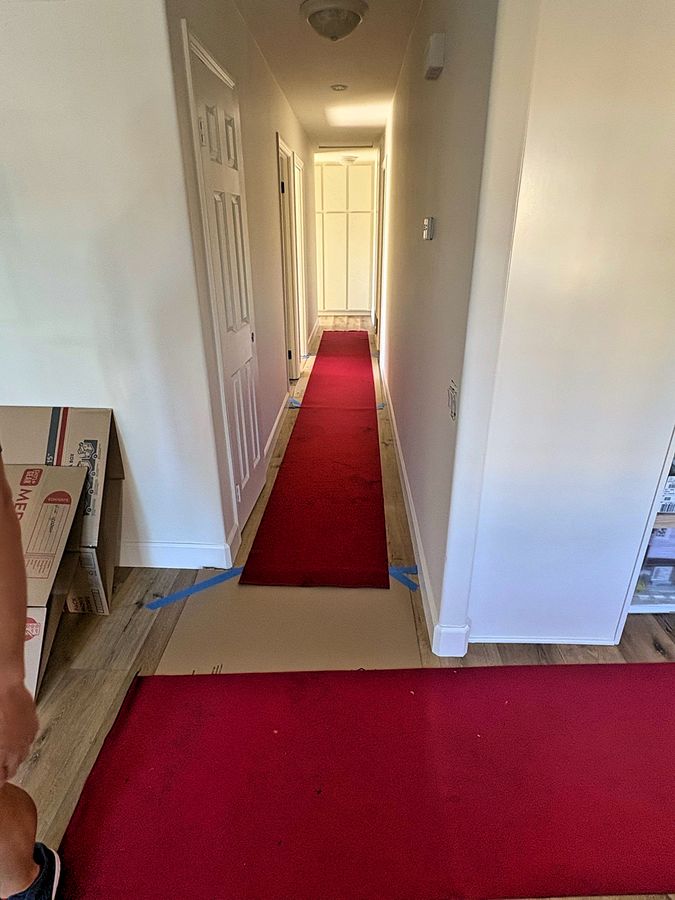
Buildings that require a COI usually require floor protection too. Runners along the route, cardboard over hard floors and lobbies, seams taped, jambs and corners covered. Down before the first item moves, at both ends. Tell us the building’s requirements and they are on the truck.
Let Us Handle the Move
Licensed California carrier since 1997. Flat-rate long distance, $119/hr cash or $129/hr card local, free in-home estimates, and every answer on this page honored in writing.
Call (858) 490-0155Mon-Sun 8am–8pm · CAL-T #201759 · Free in-home estimates