Moving Plants:
Borders & Survival
California’s agricultural stations, the plants that pass and the ones that don’t, and the honest method for getting your greenery to a new state alive.
By the Discount Movers Team · Updated July 2026 · Licensed California household mover · CAL-T #201759 · US DOT #4372335
The Rules
Plants, Borders & Trucks: What’s Actually Allowed
Plants sit at the intersection of two systems that don’t care about your monstera: agricultural law (states defend their farms from pests with real border inspections: California’s CDFA stations most famously) and trailer physics (days in a dark, unwatered, temperature-swinging box). Local moves dodge both; long-distance moves must respect both.
Crossing Lines
State-by-State Reality
- Into California: CDFA border stations inspect; indoor plants in sterile mix generally pass, citrus and garden-soil plants face quarantine rules.
- Leaving California: your destination’s rules apply. Arizona runs its own ports of entry; Vermont bans out-of-state untreated firewood; several states restrict soil outright.
- The universal safe harbor: healthy, indoor-grown plants, repotted into fresh commercial mix a few weeks before the move, traveling in your climate-controlled vehicle.
- The universal refusals: citrus across quarantine lines, plants in garden soil, anything visibly infested.
The Method
Moving Plants So They Arrive Alive
- Repot risky plants into sterile mix 3–4 weeks out; prune and inspect for pests.
- Water lightly the day before travel, moist, not soaked.
- Box upright with padding; open tops for tall plants; never the trunk of a hot car overnight.
- On multi-day drives: plants sleep indoors with you, like a well-behaved pet.
- Winter routes (our Dakotas and Minnesota runs taught this): sub-zero cars kill plants as surely as trailers. Plan around the cold or rehome beloved plants honestly.
What CDFA Requires of Houseplants
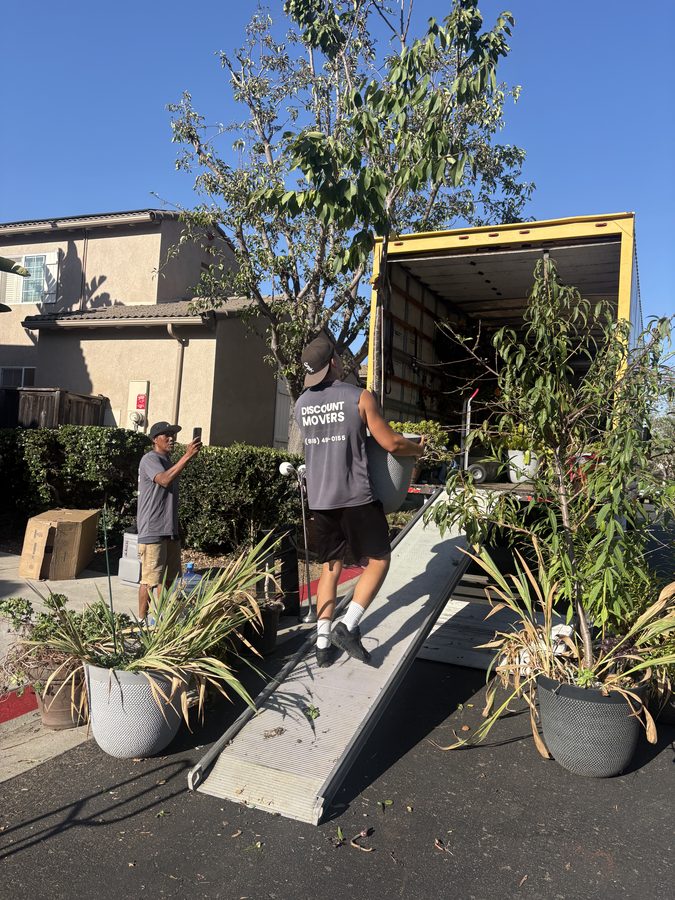
California runs 16 border protection stations on the major highways entering the state. Most years its inspectors check more than 20 million private vehicles and 7 million commercial vehicles there, and reject over 82,000 lots of plant material that violated state or federal quarantine law, according to the California Department of Food and Agriculture. If you are driving your plants in, expect an inspection stop, and keep the pots where an officer can see them.
CDFA's rules for bringing plants into California set four conditions for houseplants: they must have been grown in your home, not be for resale, be free of pests, and be potted in sterile, packaged, commercial potting mix. CDFA also expects them to be ornamental plants, usually tropical or subtropical, and says they should not have been grown or kept outdoors or planted in soil taken from a backyard. Officers at the station may reject and confiscate any plant that shows signs of pests or disease, so inspect each pot yourself before you leave.
Two categories get harder treatment. CDFA states that all citrus plants are prohibited, with no exception for a potted lemon on a patio. Private owners of pine, oak, fruit and nut trees are strongly discouraged from moving them into California unless every provision of the applicable federal and state quarantines can be met. If a plant falls into either group, CDFA's Pest Exclusion Branch answers questions at peinfo@cdfa.ca.gov or (916) 654-0312, and a call before the move beats a confiscation at the station.
San Diego's Citrus Quarantine, Explained
Leaving San Diego with a citrus tree runs straight into a quarantine. CDFA declared a huanglongbing (HLB) quarantine in north San Diego County in August 2021 after the disease was found in two citrus trees on one residential property in Oceanside, per the CDFA quarantine announcement. That quarantine prohibits moving any citrus nursery stock or plant parts out of the area, and residents are urged not to move citrus plants, leaves or foliage into or out of it, or across state or international borders.
The quarantine area now in force dates from 2025. CDFA's 2025 San Diego County citrus notice gives an effective date of April 22, 2025 for a quarantine area that covers every property within a 5-mile radius of each HLB-positive plant. Separately, portions of San Diego County sit inside the state's Asian citrus psyllid quarantine, and CDFA records the psyllid's first California find on August 27, 2008, in San Diego County. Between the two, assume a backyard or potted citrus in a quarantined part of the county cannot leave with you.
The fruit has its own rule. Under the HLB quarantine, fruit that is not commercially cleaned and packed must not be moved from the property on which it is grown, and CDFA names oranges, lemons, grapefruit and kumquats from residential trees specifically. Pick the last of the crop and eat it at home before moving day rather than boxing it for the road. The tree itself stays behind, so tell the buyer or landlord what it is and let the new occupant enjoy it.
Fire Ant Rules and Arizona Entry
Outbound moves also run into a federal rule. The USDA imported fire ant quarantine covers all of Alabama, Florida, Georgia, Louisiana, Mississippi, South Carolina and Puerto Rico, plus portions of Arkansas, California, New Mexico, North Carolina, Oklahoma, Tennessee, Texas and Virginia. Inside those areas, plants with roots and soil attached are regulated when they leave. The exception matters for a household: houseplants maintained indoors and not for sale are exempt. A pot that has lived on the patio for a season does not fit that description.
Arizona publishes its own entry terms, and they are worth reading before you load the car. The Arizona Department of Agriculture admits indoor houseplants for personal use without a certificate from the origin state as long as they are free of insects, weeds and disease and are potted in a clean, commercially prepared potting mix. All other plants need a certificate from the origin state attesting they are generally free of pests and meet quarantine entry requirements.
Arizona adds one more condition for plants that originate in an imported fire ant or harmful nematode quarantine area: they must be received by a nursery, business or individual holding a valid Quarantine Holding Area. For a family driving a car full of ferns, that means keeping everything strictly indoor-grown in bagged mix, which sidesteps the certificate. If your home sits inside a fire ant quarantine area, ask Arizona whether the holding area rule applies to houseplants. The Arizona Department of Agriculture takes questions at (602) 542-0992 if a specific plant is in doubt.
FAQ
Plant-Moving Questions
Let Us Handle the Move
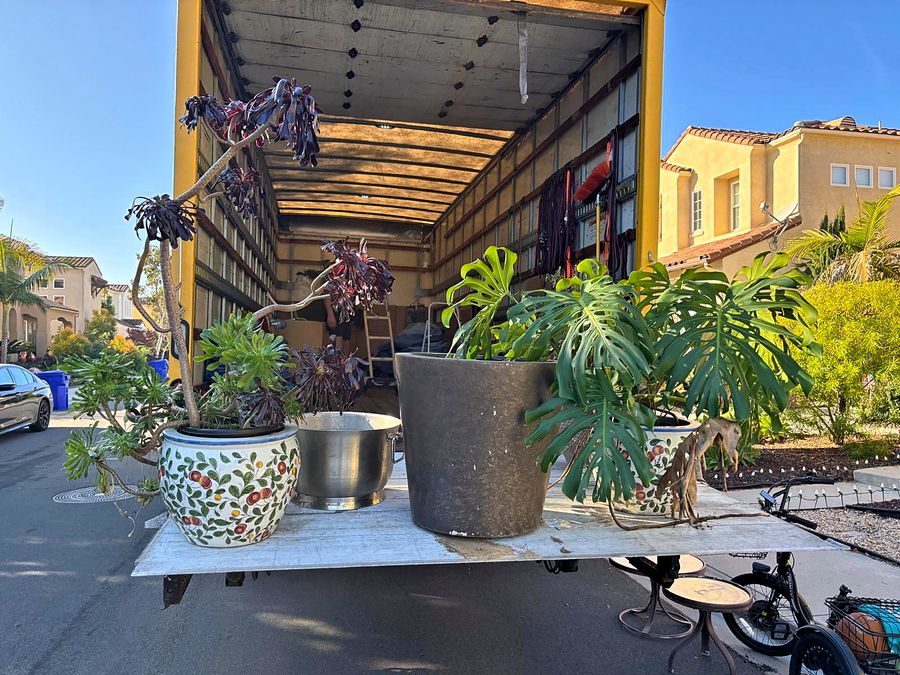
Licensed California carrier since 1997. Flat-rate long distance, $119/hr cash or $129/hr card local, free in-home estimates, and every answer on this page honored in writing.
Call (858) 490-0155Mon-Sun 8am–8pm · CAL-T #201759 · Free in-home estimates
Free Quote
GET YOUR FREE QUOTE
We respond within 2 hours during business hours (8am–8pm daily). No commitment.